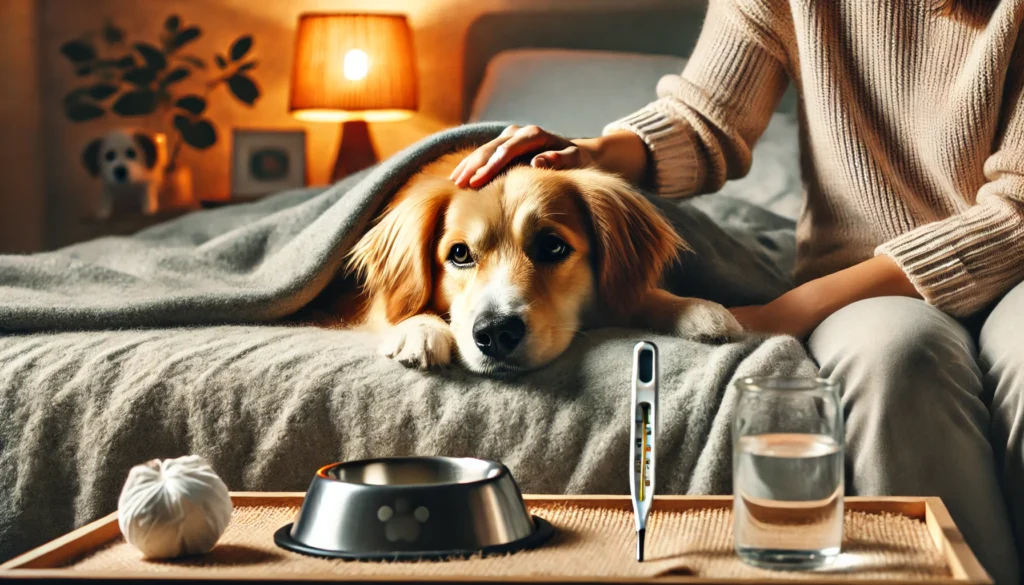
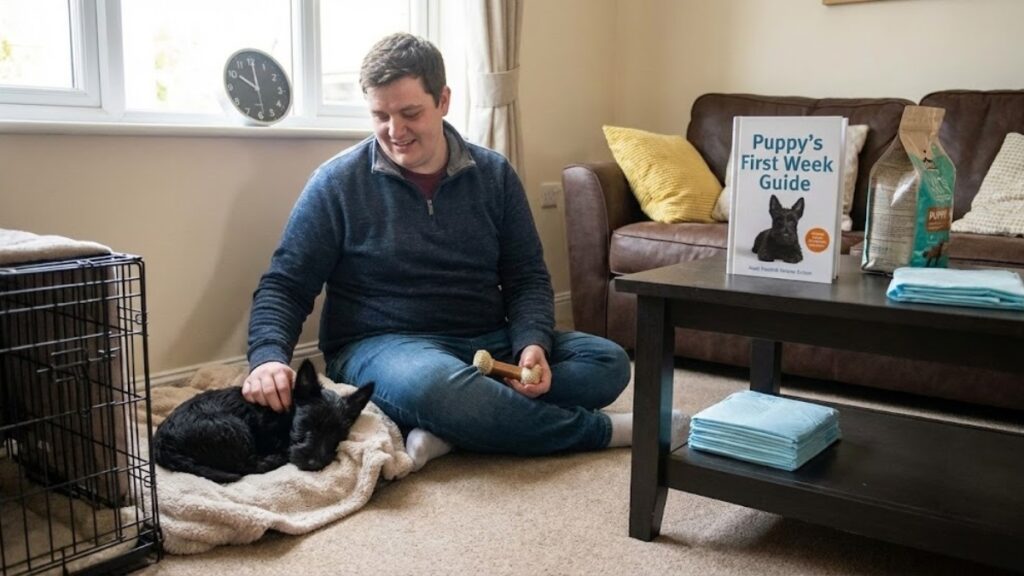
Cute as a button. Stubborn as a mule. Tiny and full of personality. Sound familiar? If you’re wondering what to expect the first week with a Scottie puppy, you’re in the right place. Bringing a Scottish Terrier puppy home is equal parts joy and mayhem. That first week sets the tone. It builds trust. It starts routines. It is where most problems either begin or get stopped in their tracks.
This guide walks you through a calm, realistic first seven days. Short paragraphs. Real voice. A few quick anecdotes from my own messy first week with a Scottie. No fluff. No em dash.
Ready? Let’s roll.
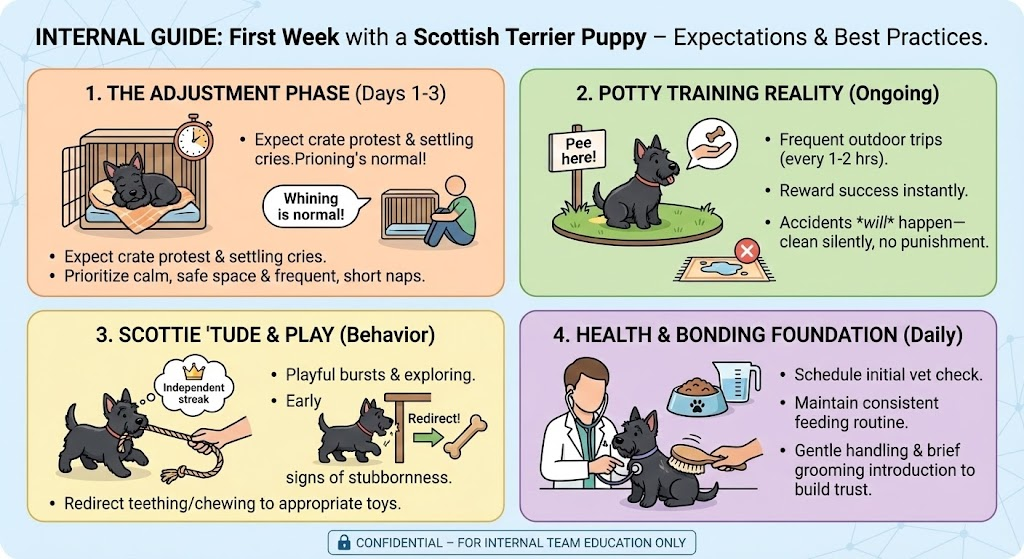
What to expect the first week with a Scottie puppy?
Tiny paws, big attitude. Your first week with a Scottie puppy is equal parts chaos, cuteness, and discovery. Get ready for sleepless nights, chewed shoes, and instant love.
| When | What to Expect | Quick Tips |
| Before arrival | Prep supplies and puppy-proof one room | Crate, front-clip harness, long line, treats, enzymatic cleaner |
| Car ride & first hour | Quiet, confused, sniffing, short naps | Use crate, towel with breeder scent, one-room intro, potty right away |
| Day 1 | Settling, first crate experience, first outdoor potty | Keep visitors away, praise outdoor potty, short calm play |
| Day 2 | Start a simple routine, name games, monitor eating | Wake-potty-eat-play-nap schedule; log stools and meals |
| Day 3 | Gentle handling and light grooming | Touch paws/ears for a minute, offer toothpaste treat, be calm |
| Day 4 | Low-stress outings and sound exposure | Carry outside, low volume sounds, brief meet with one calm dog |
| Day 5 | Micro training begins (name, sit, come) | 3–5 minute sessions, use high-value treats, end on a win |
| Day 6 | Tighten potty rhythm, build crate confidence | Last potty before bed, crate near you, increase short crate time |
| Day 7 | Review progress, rest, plan week two | Note wins, set small goals, consider puppy class for weeks 5–8 |
| Common issues | Night whining, accidents, picky eating, nipping | Stay calm, clean with enzymatic cleaner, redirect with toys |
| Health & records | Vet check, vaccines, deworming notes | Schedule vet if needed, keep microchip and paperwork handy |
| Quick checklist | Daily must-dos for week one | Potty every 1–2 hrs, 3 short trainings, 1 mental game, crate naps |
Why the First Week Matters
Why does the first week matter so much? Simple. Puppies learn fast. Not just commands. They learn what the world is like. They learn your rules. They learn how you will respond when they cry at night or have an accident on the rug.
Set a good rhythm now and you sleep better later. Set a sloppy rhythm now and you will be cleaning and retraining. Which would you pick?
In the first week you are not making a perfect dog. You are building a safe, predictable environment. You are making the puppy feel like they belong. You are starting the small habits that add up.
Small wins count. A first night where the pup sleeps in the crate for two hours counts. A single successful outdoor potty counts. Celebrate those things. They matter more than perfection.
Before the Puppy Arrives: Get Ready
You do not need to go crazy. But you do need the basics. Here is a checklist that actually works.
Essentials to have ready:
- Crate with a divider and a comfy blanket.
- Front-clip harness and a 6 ft leash.
- A 15 ft long line for recall practice.
- Small, soft, smelly training treats. Think tiny pieces of boiled chicken.
- Food and water bowls, high quality puppy food.
- Enzymatic cleaner for mistakes. Trust me on this.
- A couple of chew toys, one puzzle feeder or snuffle mat.
- Baby gates or a playpen to limit roam.
- Nail clippers, a brush, and a soft towel.
Puppy-proof your main living area. Tuck cords. Hide shoes. Put houseplants out of reach. If you have stairs, use a gate. Make one room the training and sleeping zone for the first few days. Fewer choices is better for a young brain.
Tell the household what the rules are. One set of command words. One person in charge of night wakes for the first week. Mixed signals are confusing for a puppy that is sizing up their new pack.
A small anecdote: I once forgot to hide the TV remote. My Scottie chewed one corner off. It was my fault. Lesson learned. Put the remote away.
The Car Ride Home and First 60 Minutes
Keep this calm.
Use a crate or carrier in the car. Bring a towel with a breeder or shelter scent if you have one. Do not play loud music. Keep voices low. Motion sickness is a thing, so avoid feeding right before the trip.
At home, limit the first room. One room only. Let the pup explore at their own pace. Show them the crate, but do not force them in. Toss a treat inside. Let them find it.
Take them to the same potty spot right away. Wait a minute or two. Praise them when they go. Keep praise soft and calm. Big celebrations can confuse them at first.
First night is often rough. Expect whining and some anxiety. Crate placement helps. I put the crate near my bed the first week. It cut down crying.
A blanket with a familiar scent helps. But do not reward loud whining with snuggles. Comfort for real needs. Ignore attention-seeking noise. You are teaching calm, not drama.
Day-by-Day: What to Do and Expect
Here is a simple plan for the first seven days. Take it as a guide, not a rule carved in stone.
Day 1: Meet and Settle
Main focus: Potty, crate, calm bonding.
Do: Let them sniff, feed a small meal, show the crate, set the potty spot.
Avoid: Visitors, big changes, long walks.
Day 2: Start a Routine
Main focus: Predictability.
Do: Start a simple schedule: wake, potty, breakfast, short play, nap, training, dinner, bedtime. Start name recognition games.
Watch: Eating, stools. Call breeder or vet if anything looks off.
Day 3: Gentle Handling and Grooming
Main focus: Touch tolerance.
Do: Handle paws, ears, mouth for a few minutes with treats. Short brushing session. Let them taste puppy toothpaste on your finger for tooth comfort.
Avoid: Forcing nail trims.
Day 4: First Short Outings and Light Exposure
Main focus: Low stress exposures.
Do: Carry them for a short walk or sit outside. Let them watch the world from a porch. Play some simple sounds at low volume. If meeting one calm, vaccinated dog, keep it brief and supervised.
Avoid: Busy dog parks or chaotic places.
Day 5: Start Micro Training
Main focus: Basics.
Do: 3 to 5 minute sessions. Name, sit with a lure, come on a long line indoors. End each session on a success. Use high value treats.
Note: Puppies get tired fast. Less is more.
Day 6: Potty Rhythm and Crate Confidence
Main focus: Consistency.
Do: Tighten potty schedule. Crate near you at night. Gradually build crate time while you are home. Track accidents. Stay calm and adjust.
Day 7: Review, Rest, Plan Ahead
Main focus: Reflection and tiny celebrations.
Do: List wins. Set goals for week two. Maybe sign up for a positive puppy class for week five or six. Celebrate the small stuff.
Sample Daily Schedule (Easy & Realistic)
Puppies are simple machines. They eat, poop, sleep, play. Give them a predictable rhythm and they relax.
Sample for an 8 to 12 week pup:
- 07:00 Wake and potty
- 07:15 Breakfast
- 07:30 Short play, 5 minute training
- 08:00 Crate nap
- 10:00 Potty + 3 minute training
- 12:00 Potty + short supervised sniff time
- 12:30 Nap
- 15:00 Potty + enrichment (puzzle feeder)
- 16:00 Free play
- 18:00 Dinner
- 18:20 Gentle handling and brushing
- 20:00 Last potty and crate for night
- Night: 1 to 2 potty checks if needed
Adjust timing to your life and your pup’s needs. If they sleep longer, do not wake them unless required for potty. If they need more breaks, give them breaks.
Potty Training: The Real Deal
This is where patience is your best friend.
Golden rules:
- Take them out often. Every 1 to 2 hours for very young pups. Always after naps, meals, and intense play.
- Use the same spot outside. Smells teach them faster.
- Reward successes immediately with a soft praise and a tiny treat.
- Do not punish accidents. It just confuses the puppy and damages trust. Clean thoroughly with enzymatic cleaner so smells do not invite repeats.
If accidents happen indoors, stay calm. Interrupt gently, take them out, and praise them if they finish outside. If accidents happen a lot, tighten the schedule. Consider a crate to help teach bladder control, but do not use the crate for punishment.
One time, my Scottie chose the welcome mat as a bathroom in hour two after arriving. I was annoyed, but yelling did nothing.
I cleaned it, moved the mat, tightened potty breaks, and praised every outdoor success. Within a week things improved. It takes time.
Crate Training: Make It a Den, Not a Jail
A crate is a tool. Use it well.
- Feed meals in the crate. Let the pup associate it with good things.
- Toss safe chew toys and treats inside.
- Start with short closed door periods while you are nearby. Build up slowly.
- Keep the crate comfortable but not overcrowded. Use a divider so the puppy does not feel lost in a big space.
- Never use the crate as punishment.
Keep the crate near you at night the first week. It calms them. Over time, move it to its permanent spot.
First Training Moves: Short and Fun
Start small. Start joyful.
Commands to begin:
- Name recognition: Say their name, reward eye contact.
- Sit: Use a treat to lure. Mark the moment and reward.
- Come: Use a long line indoors, squat down, cheerful voice, reward heavily.
- Leave it: Closed fist with a treat, wait for the pup to back off, then reward with a better treat.
Keep sessions 3 to 5 minutes. Do several across the day. End on a success. If they get bored, stop. Come back later.
Make training a game. Scotties are clever negotiators. If training is boring, they will find something better to do.
Socialization and Enrichment: Tire Their Brain
Socialization is exposure, not overwhelm.
- Start with calm, positive experiences. One new thing at a time.
- Let them sniff and explore. Pair new things with treats.
- Start handling practice: touch paws, ears, around the mouth. Make it fun with treats. This helps future vet visits and grooming.
Mental enrichment is as important as exercise. A 10 minute snuffle mat can burn more brain than a 20 minute walk. Use puzzle feeders, scent games, and short tricks.
If your pup naps after a mental task, that is a good sign. They worked their brain.
Common Problems and Quick Fixes
Some things will happen. Here is how to handle them.
Crying at night
Normal the first night. Comfort briefly if needed. Use a consistent bedtime routine. If it persists, check for potty needs, hunger, or discomfort.
Refusing food
A new environment can reduce appetite. Try warming the food slightly or adding a little bit of wet food. If they refuse to eat for 24 hours, call your vet.
Excessive chewing or nipping
Redirect to chew toys. Use the “Ouch” signal and pause play. Reward gentle mouthing when they choose a toy.
Accidents inside
Clean with enzymatic cleaner and tighten the schedule. Praise outdoor success.
Fearful reactions
Back off, reduce pressure, reward calm behavior, and slowly re-introduce the trigger at lower intensity.
Health, Vet, and Paperwork
Book a vet visit within the first week if possible. Bring all breeder or rescue paperwork. Ask about vaccinations, deworming, flea prevention, and future spay or neuter timing.
Know the emergency contacts for after hours.
Watch for red flags: repeated vomiting, diarrhea, refusal to drink, lethargy, bloody stool, or no bowel movement for over 24 hours. Call the vet if you see these.
Keep microchips and registration details safe.
Bonding Without Smothering
Scotties are affectionate on their terms. You do not need to be glued to them to bond.
Ways to bond:
- Sit on the floor and read. Let them come to you.
- Hand-feed a few meals or treats during calm times.
- Gentle grooming and massaging with treats.
- Short, calm play sessions.
Don’t chase them for cuddles. That makes play more exciting than calm contact. Be the calm person they trust.
Safety Notes and Boundaries
Keep your pup safe, your stuff intact, and your sanity mostly in check. Setting clear boundaries now saves headaches later.
- Use a front-clip harness for walks to reduce pulling.
- Keep small chewables, cords, and houseplants out of reach.
- Secure balconies and yard gates.
- Supervise interactions with children and other pets. Teach kids calm handling.
When to Call a Trainer or a Vet
Call the vet for health red flags. Call a force-free trainer if you see serious resource guarding, aggression, or if the pup shows extreme fear that does not improve with gentle exposure.
Getting professional help early can be cheaper and less stressful than trying to fix entrenched problems later.
Quick First Week Checklist (Print or Tape to Fridge)
Everything you need at a glance. One sheet, big wins, zero guesswork.
Daily must-dos
- Potty every 1 to 2 hours + after meals and naps.
- 3 to 4 short training sessions of 3 to 5 minutes.
- One mental enrichment time (puzzle or sniff game).
- Crate naps during the day and night.
- One new sound or surface exposure.
Emergency items
- Vet number, after-hours clinic.
- Enzymatic cleaner.
- Small, soft treats.
- Crate, blanket, and a favorite toy.
Final Thoughts and Encouragement
This first week is intense. It is also remarkable. Tiny teeth, tiny snores, tiny personality. You will have setbacks. You will have laughs. You will worry. All of that is normal.
Ask yourself: Would you rather have a predictable few weeks now, or fix big problems later? Do the small, patient stuff now. Be consistent. Use rewards. Keep training short and positive. Celebrate tiny wins.
You are building a life with a smart, independent, stubborn, loving little dog. It is worth it.
Start with one small thing today. Call the pup by name and reward the look. That one tiny win is your momentum for the week.
You’ve got this. Go make some memories.

Pet trainer with a passion for helping animals and owners build strong, loving bonds through positive reinforcement and expert care.