
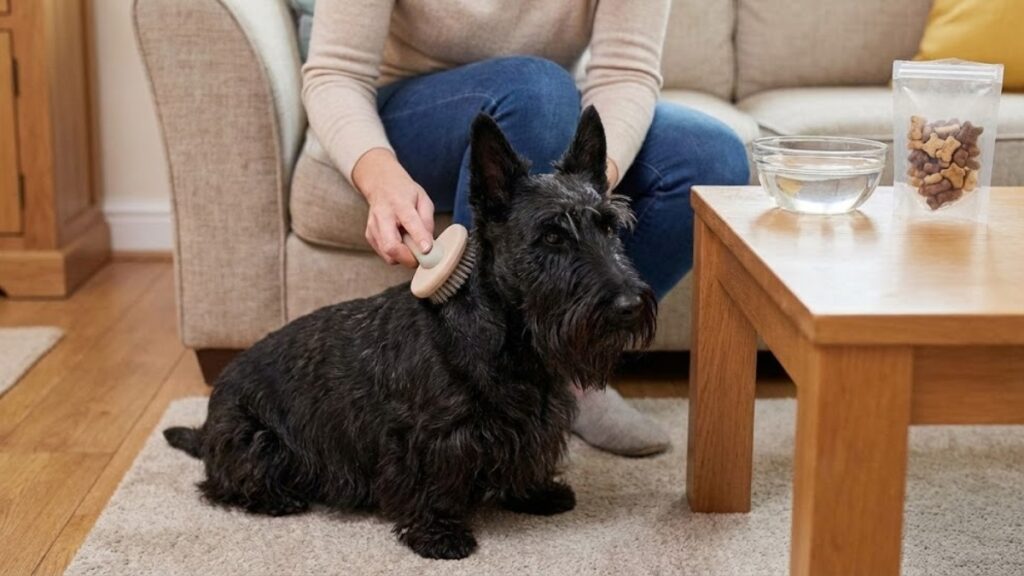
Let me tell you something right up front. Scottish Terriers, or “Scotties” to those who love them, are not like most dogs. You do not own them, not really. You form a truce. A partnership. A little alliance between species. And if you do it right, they will guard it with their whole wiry little heart.
I have worked with Scotties for over fifteen years. I have had them at my feet in obedience classes, in my lap while writing training notes, and on the other end of a leash when they decided a jogger in a bright jacket was clearly up to no good. I have trained stubborn males, shy rescues, and sassy show females who pranced into the ring like royalty.
There is Fergus, who once refused to walk past a parked bicycle for reasons known only to him. Molly, who could open the fridge (yes, the fridge) to steal roast beef. And Angus, who held his bladder for nine hours because the grass outside was wet.
They are funny. Independent. Courageous. Sometimes frustrating. And always, always worth it.
If you have just brought one home, or you are thinking about it, this guide will take you through everything I have learned — the good, the challenging, and the quirks you will not read about in most care tips articles.
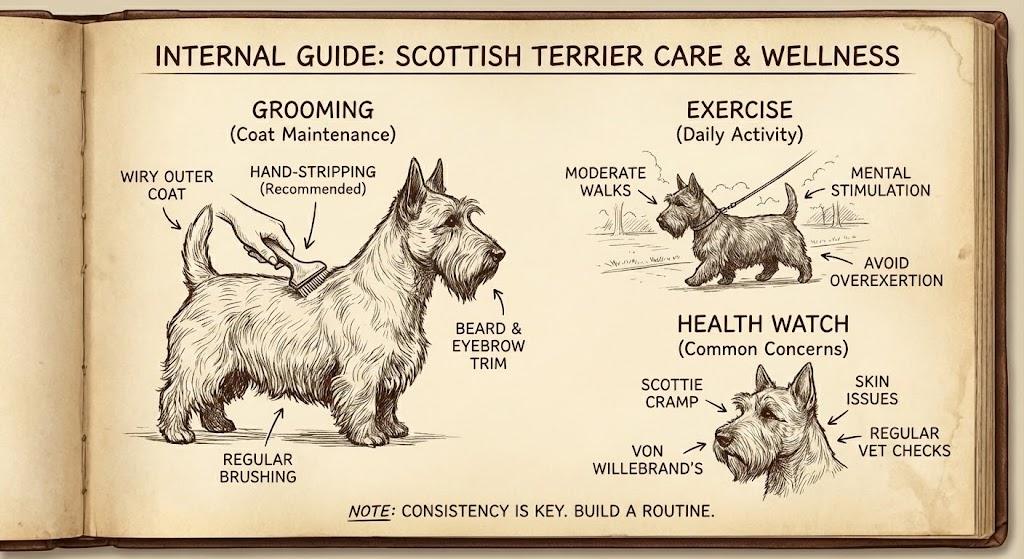
Scottish Terrier Care
Scottish Terriers are small in size but big in personality—discover the essential care tips every proud owner must know to keep them healthy and happy.
The Problem
People see a Scottie and think:
- Small dog.
- Probably a lap dog.
- Probably easy to groom.
- Probably fine with short walks.
- Wrong on almost every count.
Scotties are small, yes, but they are solid muscle under that skirt of fur. They are not fragile little fluffballs. They have a working dog’s mind and a watchdog’s heart. They will not blindly follow orders. They will listen, think it over, and then decide if your idea matches their idea.
Grooming is a bigger deal than you think. That wiry topcoat and soft undercoat? It mats. It traps dirt. It needs a regular schedule, or you will end up with tangles you have to cut out.
Exercise-wise, they surprise people. Those short legs? They were built for power, not laziness. And their prey drive… oh boy. You will not train away their urge to chase squirrels. You will just learn to manage it.
The biggest issue is mismatched expectations. People want a constant snuggler, a yes-man, a maintenance-free buddy. A Scottie will give you loyalty, humor, and devotion, but only with a little give and take.
The Solution
Fixing these issues is not complicated, but it does take real commitment and patience. If you work with a Scottie’s nature instead of against it, you will avoid most of the common headaches.
First week: getting comfortable
- Set the tone early. Your Scottie will quickly figure out who’s in charge. Stay calm, consistent, and confident. Don’t let them take over the house right away.
- Create a safe space. Use gates or a playpen to keep them somewhere secure when you can’t watch closely. Remove things they might chew on, like shoes or wires.
- Start a routine. Feed, walk, train, and rest at roughly the same times each day. Scotties like knowing what to expect.
- Begin simple training. Keep sessions short and fun. Teach “sit,” “come,” and name recognition with lots of praise and small treats.
- Let them come to you. Sit on the floor and let them explore at their own pace instead of forcing cuddles.
Weeks two to four: building trust and skills
- Keep their brain busy. Use puzzle feeders, hide treats, or play scent games. Mental work is as important as physical exercise.
- Add proper walks. Two solid walks of 15 to 20 minutes each plus playtime is a good start. Short legs do not mean low energy.
- Start grooming habits. Brush the coat every other day and handle their paws and ears so they get comfortable with being touched. Book a groomer if you prefer not to do hand-stripping yourself.
- Socialize carefully. Introduce people and places slowly. Avoid chaotic dog parks; calm, controlled encounters work best.
- Work on leash manners. Use a harness and reward walking beside you. Scotties can become strong pullers if you do not address it early.
Months two to three: getting stronger together
- Teach more commands. Add “stay,” “leave it,” and “drop it.” These commands are vital when prey drive shows up.
- Watch their weight. Weigh your dog weekly. If they start gaining, cut portions slightly or increase exercise.
- Keep grooming on schedule. A professional groom every 6 to 8 weeks plus regular brushing at home keeps the coat healthy.
- Practice recall. Call them from a distance and with mild distractions so they learn to come even when tempted.
- Expose them to new things. Short car rides, different neighborhoods, and visits to friends build confidence.
Long term: keeping it going
- Daily brain games. Rotate toys, teach new tricks, or set up scent trails indoors. Mental work keeps them happy and balanced.
- Exercise consistently. Aim for 45 to 60 minutes a day split into chunks. Scotties were bred to work and can handle regular activity.
- Check weight monthly. From above, a healthy Scottie should show a waist.
- Make grooming routine life, not a chore. Brush at least twice a week and stick to professional grooming every couple of months.
- Keep training fun. Older Scotties still love learning and it strengthens your bond.
A few things to remember
- Respect their smarts. They think things through, so include them in the process instead of treating them like robots.
- Work with instincts, not against them. You cannot remove a chase instinct, but you can channel it into games, scent work, or controlled activities.
- Be consistent. Scotties will test unclear boundaries. Clear rules mean fewer problems.
- Keep your sense of humor. They will surprise you in ways that make you laugh and in ways that test your patience.
When you meet their physical, mental, and emotional needs, you get the best of the breed: a confident, funny, and fiercely loyal little dog who always has your back.
Social Proof: What the Experts Say
This isn’t just my opinion. Science and experts back it up.
Grooming
The American Kennel Club stated in their official breed guidelines updated on March 15, 2023, that without regular brushing and grooming, the Scottie’s distinctive shape will disappear. The coat will mat and become uncomfortable for the dog.
Exercise
On July 12, 2021, Dr. Karen Overall, a respected veterinary behaviorist, explained in a webinar that terriers retain a strong prey drive. They require safe and structured outlets for those instincts, or they risk frustration and behavior problems.
Training
A study published on November 4, 2020, in the Journal of Veterinary Behavior found that independent dog breeds showed 70 percent better learning outcomes when trained with short, reward-based sessions compared to punishment-based methods.
Health Risks
According to the Morris Animal Foundation’s report released in August 2019, Scottish Terriers are 18 to 20 times more likely to develop transitional cell carcinoma than the average dog breed.
Grooming: More Than Just a Brush and Go
You can’t fake the Scottie look. That hard, wiry outer coat and dense undercoat are not just for show — they evolved to protect against brambles, rain, and cold winds in the Highlands. But that means they need proper upkeep.
Weekly Routine
Brushing
Brush at least twice a week. Start with a slicker brush for the outer coat, then use a steel comb to reach the undercoat. This stops mats from forming, which can pull painfully at the skin.
Bathing
Give baths only every six to eight weeks or when your Scottie is truly dirty. Overbathing strips natural oils and makes the coat softer. While that sounds nice, it ruins the coat’s protective function.
Haircuts
Book a grooming appointment every six to eight weeks. Hand-stripping, which means pulling out dead hairs to keep the texture healthy, is ideal but requires skill. If you’re not showing your dog, clipping is perfectly fine.
Ears
Clean their ears once a week. Scotties can get wax buildup and debris from sniffing around bushes and plants.
Nails
Keep their nails short. Long nails change the way they walk and put stress on their joints.
Bill’s Tip
Start grooming training when your Scottie is a puppy. Hold their paws, touch their ears, and gently open their mouth. Make grooming feel normal before they hit that “teen” phase and start getting suspicious of everything.
Story
Fergus once had to be shaved down completely because his coat was so matted after his owner skipped grooming for months. His coat grew back, but he looked like a completely different dog for a while — and he hated the cold without his fur. Lesson learned.
Diet and Nutrition: Watch That Waistline
Scotties tend to gain weight easily. Their sturdy build can hide an extra pound or two, but those pounds add up quickly and put strain on their joints.
Feeding Guidelines
- Choose a dog food that lists meat as the first ingredient. Avoid foods with unnecessary fillers like corn or soy.
- Adult Scotties usually need about one to one and a half cups of food per day, divided into two meals.
- Keep treats small, about the size of a pea, and healthy. Good options include baby carrots, green beans, and apple slices without seeds.
- Avoid giving table scraps, especially those high in fat or salt.
Research
The Association for Pet Obesity Prevention warns that even just five extra pounds on a medium-sized dog can shorten their lifespan and increase the risk of arthritis.
Story
Molly, my aunt’s Scottie, gained a lot of weight because everyone in the family was sneaking her treats. When her joints started bothering her, we switched her to a measured diet and added green beans as filler. She lost the extra weight, got her energy back, and even started jumping on the couch again.
Exercise: Short Legs, Big Energy
People often underestimate Scotties. Yes, they can nap for hours, but when they’re awake, they have a purpose and plenty of energy.
Daily Goals
- Take them for 30 to 45 minutes of walking every day.
- Spend at least 15 minutes doing interactive play, like fetch or tug-of-war.
- Give them mental stimulation with puzzle feeders, scent work, or trick training.
Why It Matters
If Scotties don’t get enough physical and mental exercise, they will create their own fun — which usually means digging, barking, or chewing things they shouldn’t.
Story
Angus hated going for walks in the rain. To keep him happy, his owner made an indoor “sniff course” using boxes and old towels to hide treats. Angus would work the course for 20 minutes straight, nose down and tail wagging.
Training: Persuasion Over Force
Scotties are smart, but they can be selective. They are not like Golden Retrievers who live to please.
Keys to Success
- Keep training sessions short, around five to ten minutes at most.
- Use rewards they really care about. Some Scotties love toys more than food.
- Be consistent with your commands so they know exactly what you want.
- Never use harsh corrections. Scotties will either shut down or dig in even more.
Story
Laird, one of my students, ignored the “sit” command for two weeks. Then one day, he walked over and sat perfectly without being asked. That was the moment I realized that sometimes a Scottie will decide when the training finally clicks.
Health: What to Watch For
Common Conditions
- Scottie Cramp: This is a harmless but strange condition where the dog’s muscles stiffen up when they get excited.
- Von Willebrand’s Disease: A bleeding disorder that your vet should test for before any surgery.
- Bladder Cancer (TCC): Scotties have a higher risk for this. Watch out for signs like blood in the urine or needing to urinate more often than usual.
Prevention
- Take your Scottie for annual vet exams that include urinalysis.
- Keep their weight healthy to reduce stress on their body.
- Avoid using lawn chemicals around your home, as some studies suggest a link between these chemicals and bladder cancer in Scotties.
Real-Life Challenges and How to Handle Them
Scottish Terriers have big personalities and sometimes unexpected behaviors. Understanding these quirks and knowing how to work with them makes life smoother and more enjoyable for both you and your dog.
Selective Barking
- Some Scotties, like Fergus, bark at very specific things — in his case, people wearing sunglasses.
- This happens because Scotties are naturally alert and notice small changes or unusual things in their environment.
- How to handle it: When you know the trigger, you can prepare your dog ahead of time. Use calm, firm commands like “quiet” or “enough” paired with treats when they stay calm.
- Gradually expose your Scottie to the trigger in controlled settings, rewarding calm behavior to reduce overreaction.
- Avoid yelling or punishment, as it often makes barking worse.
“Talking Back” With Growls
- Dogs like Molly might not ignore commands quietly. Instead, they give little growls or other sounds to “talk back.”
- This is a way for them to express their independence, not aggression.
- How to handle it: Stay patient and don’t respond with anger. Use a gentle but firm tone to repeat your command.
- Redirect their attention with a favorite toy or treat after they respond correctly.
- Make training a game to keep their interest and show them cooperation is fun.
Guarding Favorite Spots
- Angus guarded his favorite chair from anyone who tried to come near. This kind of guarding comes from their natural territorial instincts.
- It is not possessiveness in a mean way but more about feeling safe and comfortable in their space.
- How to handle it: Respect your dog’s boundaries by giving them their own space where they can relax undisturbed.
- Provide plenty of comfy spots around the house so they don’t feel the need to guard one single place.
- Teach commands like “off” or “leave it” using positive reinforcement to help them share space peacefully.
Understanding Their Stubbornness
- Scotties are not stubborn just for the sake of it. They were bred to think independently and make decisions on their own.
- This trait means training can take longer, and they might decide when they want to cooperate.
- How to handle it: Accept that your Scottie will have their own timing for learning. Keep training sessions short and positive.
- Use high-value rewards that really motivate your dog, whether that’s treats, toys, or praise.
- Be consistent with commands and routines to build trust and clarity.
How to Live Happily With a Scottie
- Respect their independence rather than trying to force change.
- Embrace their quirks as part of their charm and personality.
- Build a partnership based on trust, patience, and understanding.
- Celebrate small wins and be ready for surprises — living with a Scottie is never boring!
FAQs
Are Scotties good with kids?
Yes! Scotties can be great with kids, as long as the kids are gentle and respectful. It helps to socialize your Scottie early so they feel comfortable around children.
Do Scotties shed a lot?
Not really. They don’t shed much, but their coat needs regular brushing and grooming to stay neat and tangle-free.
Can Scotties live in an apartment?
For sure! Scotties do well in apartments if you take them out for daily walks and play with them to burn off energy.
Are Scotties hypoallergenic?
No dog is completely hypoallergenic. Scotties might bother allergies less than some dogs, but they can still cause reactions for sensitive people.
How big do Scotties get?
They’re small but strong dogs — about 10 inches tall and around 18 to 22 pounds.
How much exercise do Scotties need?
They enjoy daily walks and playtime but don’t need intense exercise. A good walk and some fun games will keep them happy.
Are Scotties easy to train?
Scotties are smart but can be a bit stubborn. Be patient, use positive rewards, and keep training sessions short and fun.
Do Scotties get along with other pets?
They can, especially if they meet other pets early. But because they have hunting instincts, they might not get along well with small animals like cats or hamsters.
How long do Scotties usually live?
They typically live about 12 to 15 years with good care.
What health issues should I watch for?
Scotties are usually healthy but can have some problems like allergies or joint issues. Regular vet visits help catch things early.
How often should I groom my Scottie?
Brush them a few times a week and visit a groomer every 4 to 6 weeks to keep their coat looking great.
Conclusion
Scottish Terriers aren’t the easiest dogs, but that’s what makes them so special. They’re small but full of personality, with a strong streak of independence. These dogs don’t just tag along — they stand by your side with loyalty that’s hard to match. Sure, they can be stubborn sometimes, but if you’re patient and consistent, they’ll surprise you with how smart and loving they really are.
Taking care of a Scottie means regular grooming to keep their coat looking good, daily walks, and some playtime to keep them happy. Training takes a bit of patience, but it’s worth it. Getting them used to kids and other pets early on helps a lot too. When you do it right, a Scottie isn’t just a pet — they become a true friend who’s always there for you.
If you want a dog that’s going to keep life interesting, make you laugh with their quirky ways, and protect you fiercely, a Scottie might be the one. They bring so much heart and character into your life. If that sounds like your kind of dog, welcome to the club — you’re in for a great adventure with a one-of-a-kind companion.

Pet trainer with a passion for helping animals and owners build strong, loving bonds through positive reinforcement and expert care.