
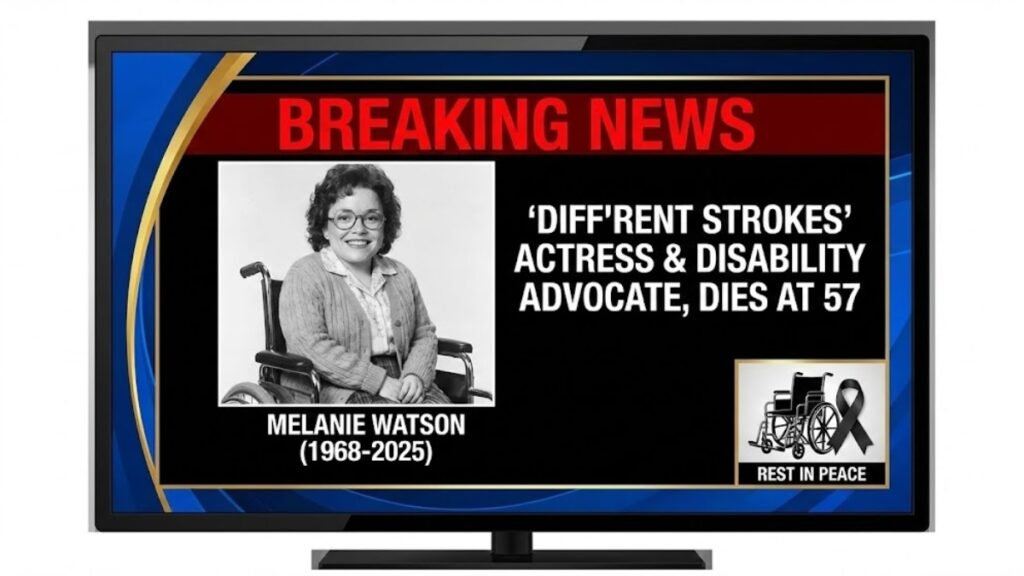
Melanie Watson Bernhardt, the actress best known for her role as Kathy Gordon on the iconic 1980s sitcom Diff’rent Strokes, has died at the age of 57. Watson passed away on Friday, December 26, 2025 in Colorado Springs, Colorado, after complications from a recent hospitalization, her brother confirmed.
Her death marks a poignant moment for fans of classic television and for communities who saw her as a quiet but powerful symbol of representation and resilience.
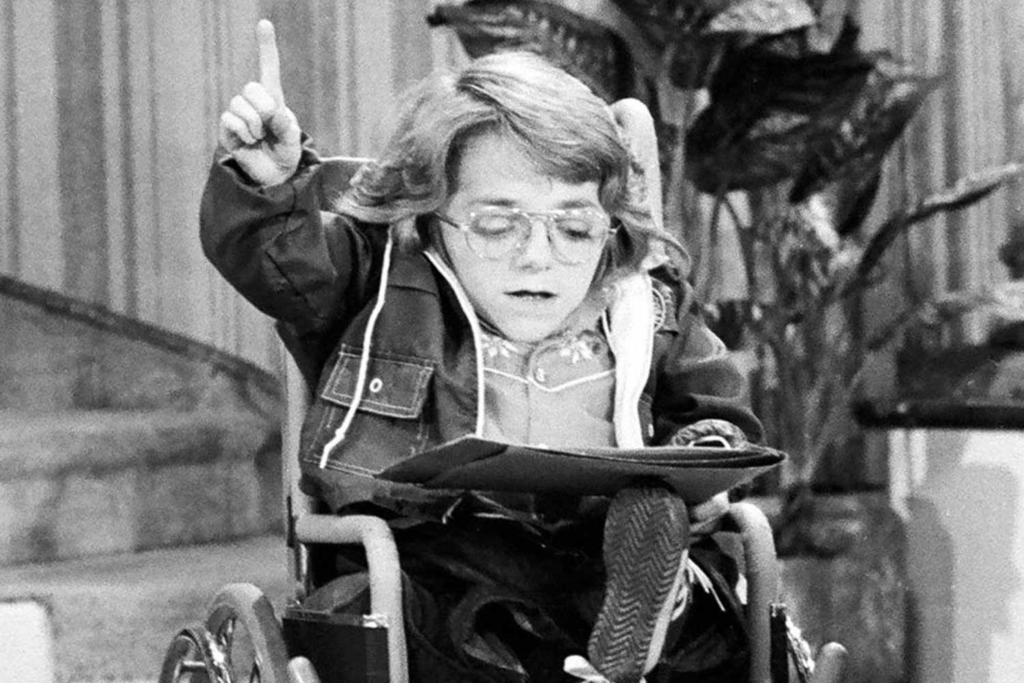
Early Life and Acting Career of Melanie Watson
Born in 1968, Watson lived with osteogenesis imperfecta, a genetic condition often known as brittle bone disease that causes bones to fracture easily. The disease also contributed to her using a wheelchair throughout her life.
She gained public recognition in the early 1980s when she appeared in four episodes of Diff’rent Strokes as Kathy Gordon, a friend of Gary Coleman’s beloved character Arnold Jackson. Her episodes included “Kathy” (1982) and “Kathy’s Olympics” (1984) — storylines that stood out for bringing a character with a disability into mainstream primetime network television at a time when such representation was extremely rare.
Watson’s portrayal of Kathy was heartfelt and memorable, notably featuring storylines that addressed physical ability and independence with sensitivity and humanity. Her character’s dynamics with the show’s lead cast gave audiences — especially young viewers — a rare opportunity to see someone with a disability integrated into a family sitcom narrative.
Life Beyond Diff’rent Strokes
After Diff’rent Strokes ended, Watson stepped away from onscreen acting, but she did not retreat from public life or service. She co-founded Train Rite, a nonprofit dedicated to training shelter dogs to work as service animals for people with disabilities, reflecting her lifelong passion for advocacy.
Her work with Train Rite earned admiration from disability rights advocates, who credited her with helping broaden public understanding of both disability and independence. Through this charity, Watson combated stereotypes and provided practical support to individuals seeking to enhance their mobility and quality of life.
Watson’s early experiences in Hollywood also informed her advocacy. In interviews later in life, she spoke candidly about the challenges she faced on set — including accessibility hurdles and the physical demands of performing with limited support — while also expressing pride that the show’s producer, Norman Lear, was willing to challenge norms and cast an actor with a disability.
Health Challenges and Final Days
Despite living much longer than doctors initially expected at birth, Watson’s lifelong health challenges remained significant. Her osteogenesis imperfecta, which can cause fragile bones, muscle weakness and other systemic complications, had shaped both her personal journey and her public life.
Her brother, Robert Watson, told TMZ that she had been hospitalized due to bleeding issues that worsened rapidly, and despite the best efforts of her medical team, her condition deteriorated. He reflected that given the severity of her condition, she had been “fortunate to live as long as she did.”
Legacy and Impact
Watson’s impact transcended the relatively small screen time she had in Diff’rent Strokes. At a time when scripted television rarely featured characters with visible disabilities, her presence on a mainstream sitcom helped broaden the idea of who could be represented on TV.
For many fans and advocates, her career stands as a reminder of how meaningful even limited representation can be. She brought authenticity to her role and later used her voice and experiences to uplift others through her nonprofit work.
Her passing also fits into a larger, more bittersweet narrative tied to Diff’rent Strokes. The show, which ran from 1978 to 1986 and became a cultural touchstone for many childhood viewers, has seen several of its cast members battle profound personal and health challenges over the decades.
Co-star Gary Coleman died in 2010 following complications from a fall and intracranial bleeding, and Dana Plato, another former cast member, died in 1999 after struggling with addiction and mental health issues.
Watson’s journey was different — shaped less by tragedy and more by perseverance and purpose — but her name is now part of that broader legacy of Diff’rent Strokes in American pop culture.
Reflections and Tribute
Fans, former cast members and disability rights advocates quickly took to social media and forums to remember Watson’s contributions. Many cited the importance of her role in helping normalize disability on television and praising her work with service dogs that helped tens of people over the years.
Entertainment figures and disability advocates alike noted that Watson’s legacy was not defined by limitation but by her commitment to showcasing ability, dignity and joy in the face of adversity.
Her life story — from child actress to nonprofit leader — is a testament to the ways in which visibility and advocacy can intersect, creating space for others to envision themselves in narratives that once excluded them.
Final Words
Melanie Watson Bernhardt lived a life marked by courage, visibility and impact far beyond her years on screen. Her presence in Diff’rent Strokes helped crack open doors that were once shut tightly against performers with disabilities. Off screen, her work with Train Rite and her voice in the disability community helped elevate causes that matter deeply to millions.
She is survived by her brother Robert, friends, colleagues, and countless fans who saw in her a reminder that representation matters, and that compassion and advocacy can reverberate long after the curtain falls.
For all those inspired by her performance as Kathy Gordon — and those touched by her efforts to expand opportunities for others — her legacy will be remembered as one of strength, heart and enduring influence.

Pet trainer with a passion for helping animals and owners build strong, loving bonds through positive reinforcement and expert care.