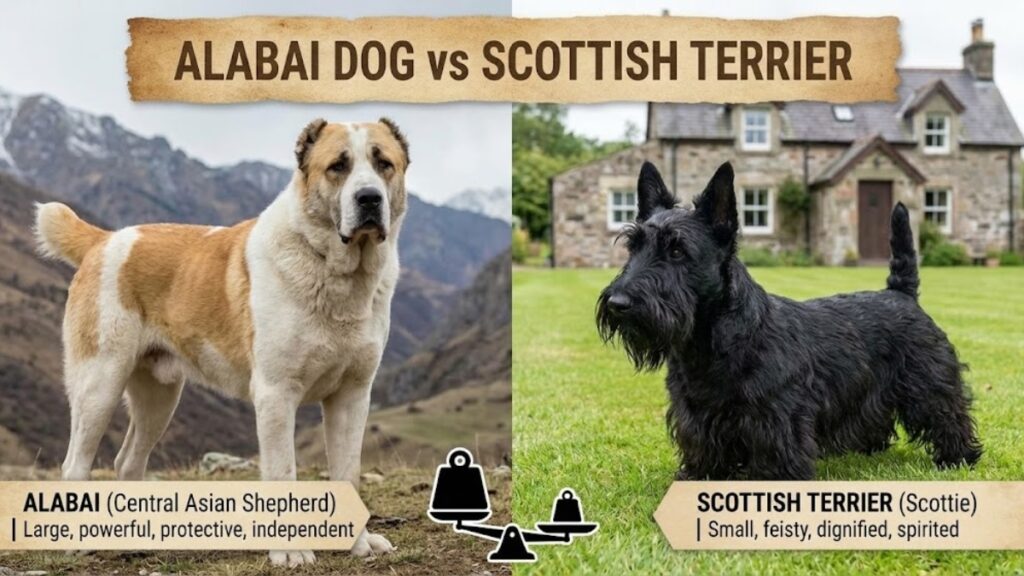
Picture a massive, broad-shouldered dog calmly watching over a flock of sheep, and then imagine a small, bearded terrier strutting through your living room like it owns the place. Both are dogs, sure—but the Alabai (or Central Asian Shepherd) and the Scottish Terrier couldn’t be more different.
One has guarded livestock on the dusty plains of Central Asia for centuries; the other has hunted foxes and badgers in the Scottish Highlands for hundreds of years.
In this guide, we’ll look at alabai dog vs scottish terrier, where they come from, what they look like, how they behave, and what kind of home and care suits each breed—so you can figure out which one feels like family for you.
Why Breed Characteristics Matter
Choosing a dog isn’t just about picking the cutest puppy. It’s about matching a dog’s natural needs—energy, space, training, grooming—to your life. Get it wrong and you’ll end up with frustration (both yours and the dog’s) or even having to rehome your new friend. Learn what each breed really needs, and you’ll set yourself—and your pup—up for years of happy companionship.
Alabai Dog vs Scottish Terrier
Alabai Dog vs Scottish Terrier: when a giant guardian meets a fearless small dog, size is not the only factor that matters.
Origin and History
Alabai (Central Asian Shepherd)
The Alabai goes back at least 4,000 years, roaming with nomadic shepherds across Kazakhstan, Turkmenistan, Uzbekistan and beyond. These dogs kept flocks safe from wolves, bears, and thieves. They were so valued that owners sometimes hung coins on their collars.
Over time, two main types emerged—big, heavy “Steppe” lines and more agile “Mountain” lines. In the Soviet era, people formalized the breed, and by the late 1980s it was recognized around the world. Today’s Alabai still carries that ancient guardian spirit, but with more consistency in size and temperament than its forebears.
Scottish Terrier
By contrast, the Scottie showed up in Scotland only in the 1500s or so, bred for crawling into badger setts and flushing out foxes. Their short legs and wiry coats made them perfect for cold, rough terrain. They were local farm dogs for centuries until Victorian high society fell in love with them, and breed clubs popped up in the late 1800s.
By 1885 the Scottie was a registered breed in both the UK and the US. Famous fans—Queen Victoria, President Franklin D. Roosevelt’s dog “Fala,” and even the Monopoly token—have cemented the Scottie as a small dog with big personality.
Physical Characteristics
Size & Build
Alabai: Think 28–31 inches tall and 100–175 pounds. They’re solid, heavy-boned, with a deep chest and a straight back. Puppies grow at a staggering pace—up to three pounds a week—finishing height by 18 months and filling out by age three.
Scottish Terrier: Just 10–11 inches tall and under 25 pounds, but don’t let size fool you—they’re sturdy little athletes. Their body is low and square (“cobby”), built for digging and bursting into action on command.
Coat & Color
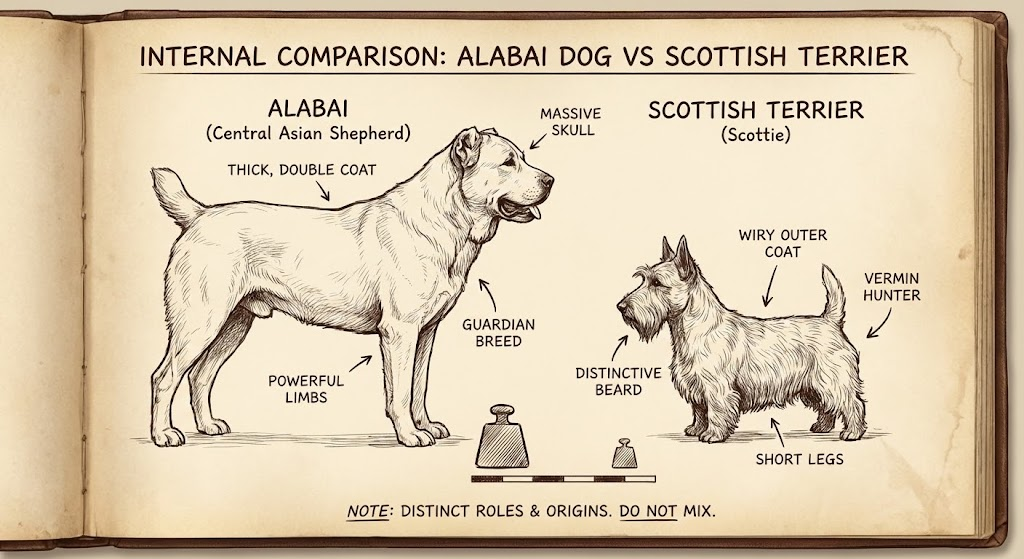
Alabai: Short-to-medium double coat—thick undercoat for extremes of heat and cold—with colors from white or cream to fawn, brindle, gray or black, sometimes in patches. Twice a year they shed like crazy, so be ready with the vacuum.
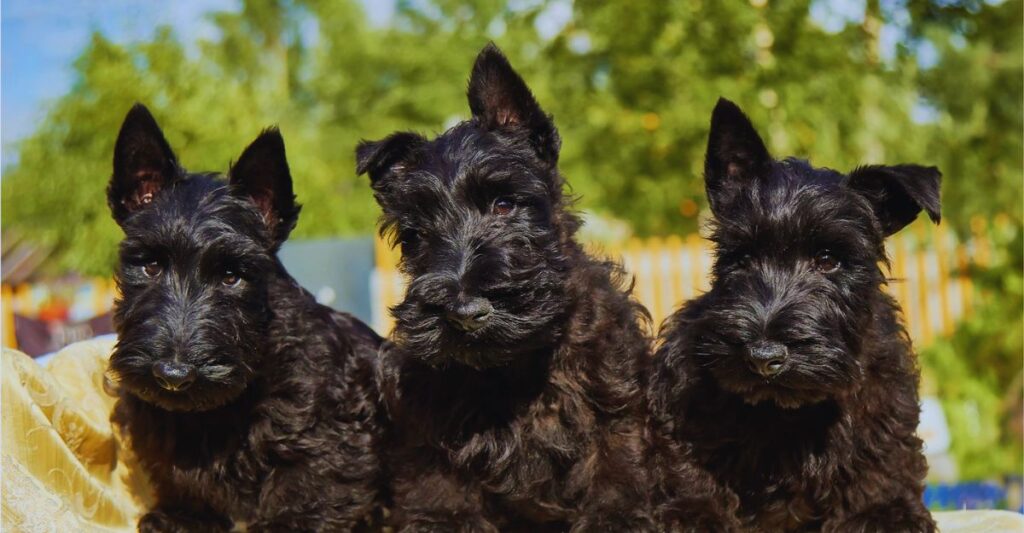
Scottie: A rough outer coat over a soft undercoat—usually solid black, brindle, or wheaten (golden tan). Their signature beard and bushy eyebrows give them a dignified, almost comical look.
Distinctive Features
Ears: Show-line Alabais often have cropped, upright ears. Working dogs usually keep their natural floppy ears, which are less prone to injury. Scotties have small, pointed ears that stand alert.
Tail: Alabais have a low-set tail with a gentle curl; Scotties get their tails docked short and carry them like little brushes in the air.
Head: Alabais have broad skulls, strong jaws and loose jowls; Scotties have long muzzles, a defined “pinch” at the top of the nose, and prominent whiskers.
Grooming Needs
Alabai: A good brushing once a week keeps loose hairs in check—daily brushing during heavy-shed seasons—and baths only every couple of months.
Scottie: High-maintenance. You’ll need to hand-strip or clip their coat every 6–8 weeks and brush them weekly to prevent mats. Many owners take them to professional groomers.
Temperament and Personality
Loyalty & Affection
Alabai: They bond deeply with their “flock” (you and your family) and will literally put themselves between you and danger. They can be gentle and calm at home but keep an eye on strangers until trust is built.
Scottie: They choose a favorite person and will shower that person with affection—on their terms. They’ll sit in your lap or at your feet but can be standoffish with visitors until they’re convinced it’s safe.
Energy Level
Alabai: They’re not marathon runners. Think 30–45 minutes of purposeful roaming or walking, then long naps. Puppies bounce more, but adults prefer to chill.
Scottie: Moderate energy—short, fun bursts of play (15–20 minutes), followed by chill time. Without enough activity, they get bored and may dig or chew.
Independence & Stubbornness
Alabai: Designed to think for themselves on the steppes, they need a clear leader. If your rules are fuzzy, they’ll test the boundaries.
Scottie: Proud, headstrong, and smart. They learn fast with positive, varied training—but repetitive drills lead to that famous “selective hearing.”
Guarding Instincts
Alabai’s Protective Drive
Born to guard, Alabais use deep barks and low growls to assess threats, then move in to block or herd intruders away. Early socialization helps them learn who’s friend or foe.
Scottie’s Watchdog Flair
Not a wolf-fighter, but their bark makes you think it is. They’ll alert you to every ring at the door or noise outside, then wait for you to take over.
Responses to Strangers & Threats
Alabai: Steps between you and danger, body-blocks or nips if needed, and holds a firm stance until the threat leaves.
Scottie: Barks, circles, maybe a quick ankle nip if cornered—but mostly relies on noise to keep trouble at bay.
Training and Socialization
Training Needs
Alabai: Short, consistent 10–15 minute sessions focusing on recall, boundaries, and impulse control. Rewards plus calm, confident leadership work best.
Scottie: Positive reinforcement—clickers, treats, praise—and plenty of games to keep them interested. Puzzle toys and hidden treats in obedience drills help beat boredom.
Socialization Requirements
Alabai: Between 3–16 weeks old, expose them to all kinds of people, animals, places, and sounds. Well-socialized puppies grow into balanced guardians.
Scottie: Puppy classes, gentle meet-and-greets with dogs, cats, kids, and household noises (vacuums, traffic) stop fear or territorial issues before they start.
Common Challenges
Alabai: Can guard food, toys or favorite spots. Practice “leave it,” “drop it,” and keep meal times structured.
Scottie: Great diggers and chase-dogs. Offer a supervised digging pit and plenty of stimulating toys to channel their energies.
Exercise and Activity Level
Daily Exercise Requirements
Alabai: 30–60 minutes of walking plus time in a secure, fenced area—better if they have a “job” like patrol.
Scottie: 45–60 minutes of walks, fetch sessions, and indoor play spread through the day.
Mental Stimulation
Alabai: Try guard-duty games—family members role-play harmless “intruders”—and step up from simple scent searches to advanced nose-work.
Scottie: Food puzzles, snuffle mats, quick training drills and “sniffaris” where they lead the way—and follow their noses.
Lifestyle Fit
Alabai: Needs at least 5 acres of secure land. City apartments won’t do.
Scottie: Fits apartment or suburban life—just give them daily walks and enough indoor enrichment.
Health and Longevity
Average Lifespan
- Alabai: Around 10–14 years—great for a giant breed.
- Scottie: 12–14 years, with many living into their teens.
Common Health Concerns
Alabai: Hip/elbow dysplasia, bloat (a serious twist of the stomach), heart issues—regular vet checks are important.
Scottie: von Willebrand’s disease (clotting), Scottie cramp (muscle spasms), jaw bone growth issues, and a higher risk of bladder cancer.
Preventive Care
No matter which you choose, plan on vet exams every 6–12 months, keep an eye on their weight, brush their teeth daily, and ask your vet about breed-specific genetic tests and screenings.
Family and Living Situation
Space & Environment
Alabai: Needs wide open, secure space—no apartments.
Scottie: Happy in apartments or houses with small yards, as long as they get regular outings.
Noise & Activity
Alabai: Mostly quiet vigilance—barks to alert, then back to watching.
Scottie: Talkative—they’ll alert you to every passerby or package delivery. Early “quiet” training helps.
Compatibility with Children & Pets
Alabai: Gentle with kids they know, but can knock over little ones by accident—supervision is a must. May see small pets as prey if not socialized early.
Scottie: Great with older, respectful kids. Their terrier instincts mean you should watch them around small rodents, birds, or reptiles.
Similarities and Differences
Shared Traits
- Both form deep family bonds and protect their home.
- Each has an independent streak—you’ll need to lead with confidence.
Key Differences
| Trait | Alabai | Scottish Terrier |
| Size | Giant (100–175 lb) | Small (19–23 lb) |
| Original Role | Livestock guardian | Vermin hunter |
| Exercise Style | Roaming + guard duty | Walks + bursts of play |
| Grooming | Brushing once a week; heavy shed twice a year | Hand-strip/clip every 6–8 wks; weekly brushing |
| Trainability | Independent; needs firm guidance | Smart; can be stubborn |
Conclusion
Matching a dog’s natural instincts to your life is the secret to a lasting friendship. The Alabai shines in open spaces where it can guard under steady leadership. The Scottie thrives in smaller homes, bringing boldness and charm—so long as you give it exercise, training, and grooming.
Choosing the Right Breed
Think hard about your space, routine, family, and budget. Do you have the land and know-how for a giant guardian? Or does a spirited little terrier fit your city life? Look for responsible breeders or rescues, and always ask for health clearances.
Next Steps for Potential Owners
- Join Breed Clubs: Find the Central Asian Shepherd Dog Club or Scottish Terrier Club of America for advice and meetups.
- Attend Events: Watch puppy socials, guardian-dog demos, and scent-work trials to see each breed in action.
- Shadow in Real Homes: Visit training classes or foster homes to feel how each dog fits in typical family life.
- Prep Your Space: Secure fencing and predator deterrents for an Alabai; grooming tools and puzzle toys for a Scottie.
Both breeds offer loyalty, character, and years of happy companionship—so trust what fits your world, and get ready for an incredible journey together.

Pet trainer with a passion for helping animals and owners build strong, loving bonds through positive reinforcement and expert care.