
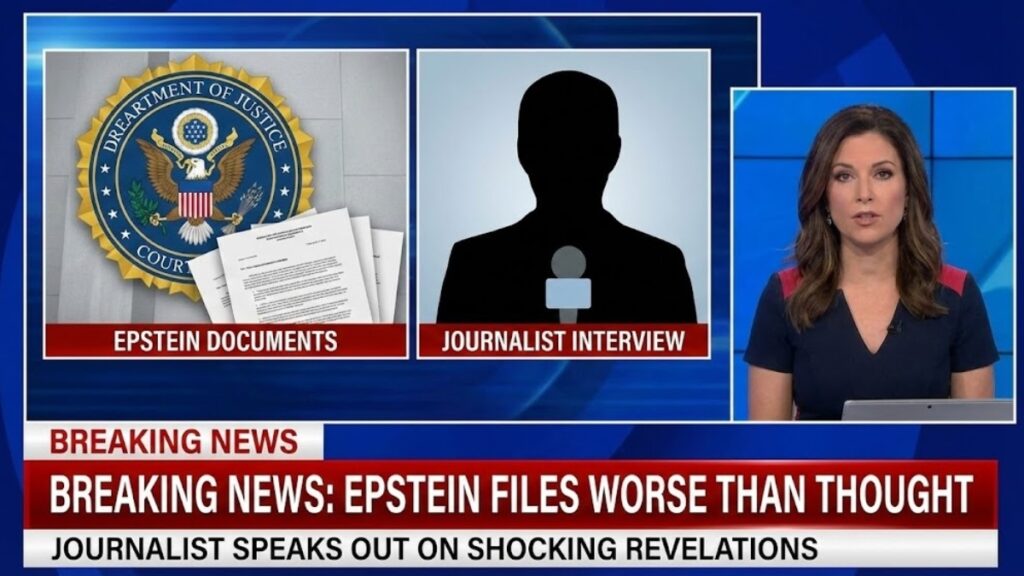
In the midst of one of the largest document disclosures in recent U.S. history, veteran investigative reporter Julie K. Brown has expressed deep concern over newly released government files connected to convicted sex offender Jeffrey Epstein.
Brown, whose work in 2017 and 2018 was widely credited with reviving Epstein’s stalled prosecution, says the latest revelations have revealed a scope of information that is more troubling and complex than she anticipated.
The disclosures stem from a massive release of documents by the U.S. Justice Department, which this month posted over 11,000 new files, including photos and other previously undisclosed material tied to the Epstein case.
A Reporter’s Shock at New Disclosures
Brown — a Miami Herald investigative journalist whose in-depth reporting exposed sex trafficking networks connected to Epstein and prompted renewed federal prosecution — spoke frankly about her reaction to the latest tranche of documents during an appearance on The Bulwark Podcast. She described the ongoing release as “worse than I thought” and said that reading through the material has been overwhelming.
“I would say most of the stuff that I’m getting is just more like, ‘Oh my God, this is worse than I thought,’” Brown said. She explained that the volume of information and the number of tips she is receiving now far exceed what she used to chase in past reporting cycles.
Brown underscored a growing concern among legal analysts and advocates — that the full breadth of the Epstein case, including the identities and actions of those associated with him, may never be fully known unless the entire record is released and examined. She urged broader media focus and collaboration, noting that the story’s size is too large for small teams or single reporters to manage.
Why These Files Matter
The ongoing release of Epstein-related documents follows a congressional mandate requiring the Justice Department to produce a comprehensive archive of evidence contained in the Epstein investigations — including interviews, financial records, emails, photos, and government files tied to his criminal network.
The latest phase of disclosures significantly expanded previous estimates of the volume of evidence, with the Justice Department now reviewing more than 5.2 million documents.
Deputy Attorney General Todd Blanche has said the process requires heavy review and redaction before public release, and that the scale of material means it could take months to fully comply with public release deadlines.
Among items already disclosed are thousands of new documents and photos, some of which are circulating widely among journalists, legal analysts, and members of Congress.
Political and Public Reactions
The newly released material has sparked intense public debate, legal discussion, and political contention. Some lawmakers have called for further transparency and questioned delays in the full release of the files.
Meanwhile, political figures named in the documents — including former President Donald Trump — have disputed or downplayed implications, characterizing aspects of the disclosures as politically motivated.
Separately, a front-page report from The Wall Street Journal has highlighted disturbing connections and allegations in related documents, including accounts that teenage spa workers from Mar-a-Lago were sent to Epstein’s mansion during his period of abuse. The report shows both the long reach of Epstein’s insidious network and the sensitivity of connections raised in the disclosures.
Calls for Full Transparency and Continued Investigation
Brown has publicly criticized how the files are being released, arguing that partial disclosures and political pressure have shaped what has been made available so far. She noted that in some cases, the government previously claimed there was little left to release — a stance she now strongly disputes.
“There definitely is stuff there,” she said, urging that all of it be examined thoroughly. Brown has called for bipartisan oversight and investigation into both the ongoing release process and the original handling of Epstein’s case, including controversial large-scale plea agreements from years ago.
Her concerns echo broader frustration among survivors’ advocates and journalists, some of whom have described the slow release process as a form of “wilful blindness” to the full truth of Epstein’s operations.
Brown’s Legacy and the Larger Story
Julie K. Brown’s reporting has been credited with reigniting public and legal scrutiny of Epstein’s crimes after decades of limited action. She first pursued the story when many outlets had stopped covering Epstein’s earlier 2008 plea deal, which critics argued was too lenient for what were serious allegations of abuse. Brown’s work detailed dozens of victims and exposed flaws in the justice system’s treatment of high-profile offenders.
Her efforts contributed to renewed federal charges against Epstein in 2019 — though he died in custody later that year — and also helped highlight systemic failures in how prosecutors handled the case.
As the latest files continue to be processed and released, Brown has suggested the story is far from over — not just for journalists, but for lawmakers, prosecutors, and advocates fighting for full accountability and justice. Her concern that powerful individuals may be shielded from scrutiny reflects a longstanding tension that the Epstein case has brought to the surface.
What’s Next
At this stage of the government’s release, experts say the number of documents already made public represents only a fraction of the total Epstein file archive. With millions of pages still under review and redaction, the remaining disclosures could reveal much more about Epstein’s network, financial dealings, and relationships with powerful figures.
Meanwhile, journalists like Brown are preparing for months — perhaps years — of analysis, reporting, and investigative work as the files are made available. Depending on what else emerges, the Epstein story could remain a dominant legal and cultural topic well into 2026 and beyond.

Pet trainer with a passion for helping animals and owners build strong, loving bonds through positive reinforcement and expert care.