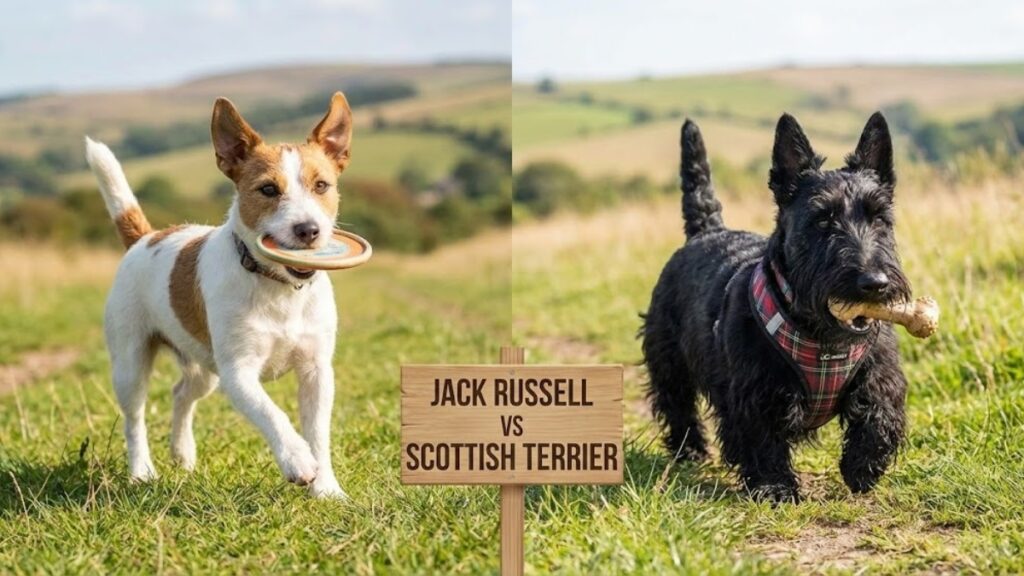
Imagine two dogs sharing a tenacious terrier spirit yet living on opposite ends of the energy spectrum: one capable of scaling a five-foot fence with a single bound, the other content to survey its kingdom from the comfort of your living room.
The Jack Russell Terrier and the Scottish Terrier both come from the broader “terrier” family — breeds originally developed to chase out pests — but their daily needs, personalities, and care requirements could not be more different.
Whether you’re an active hiker looking for a dog to keep up with you or someone who just wants a loyal, low-shedding companion, knowing the differences between these two breeds can really help. This easy comparison gives you a clear idea of what to expect with each.
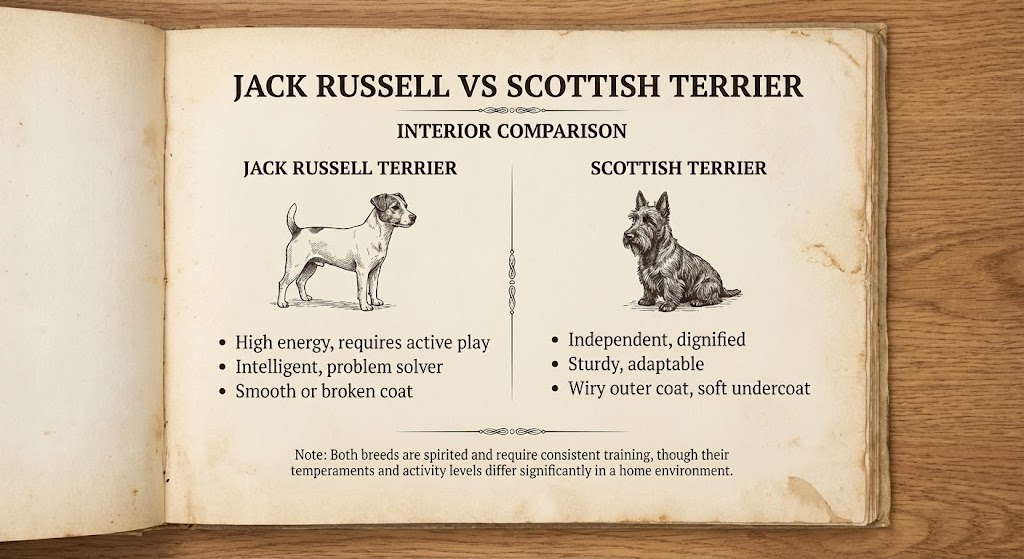
Jack Russell vs Scottish Terrier: Quick Comparison
Size & Build
- Jack Russell: 10–15 inches tall, 13–17 lbs
- Scottish Terrier: ~10 inches tall, 18–22 lbs
Energy Level
- Jack Russell: Very high; needs 60–90 minutes of serious exercise every day
- Scottish Terrier: Moderate; about 60 minutes of walks and play
Grooming
- Jack Russell: Low to moderate; weekly brushing
- Scottish Terrier: High; monthly grooming and regular brushing
Temperament
- Jack Russell: Playful, energetic, fearless
- Scottish Terrier: Dignified, independent, loyal
Who They Suit Best
- Active Families & Outdoor Lovers: Go for the Jack Russell
- Apartment Dwellers or Quiet Homes: Scotties are a great match
- First-Time Dog Owners: Scottish Terrier is easier to manage
- Experienced Dog People: Jack Russell will keep you busy (in a good way!)
Breed History & Origins
Jack Russell Terrier
Jack Russell Terriers were developed in the early 1800s by Reverend John “Jack” Russell in England. He wanted a small, fearless dog to chase foxes out of their dens but not actually harm them. Over time, Jack Russells split into working lines (still full of hunting drive) and companion lines (bred more for being house pets).
A lot of people still focus on keeping the Jack Russell true to its original lively, athletic nature.
Scottish Terrier
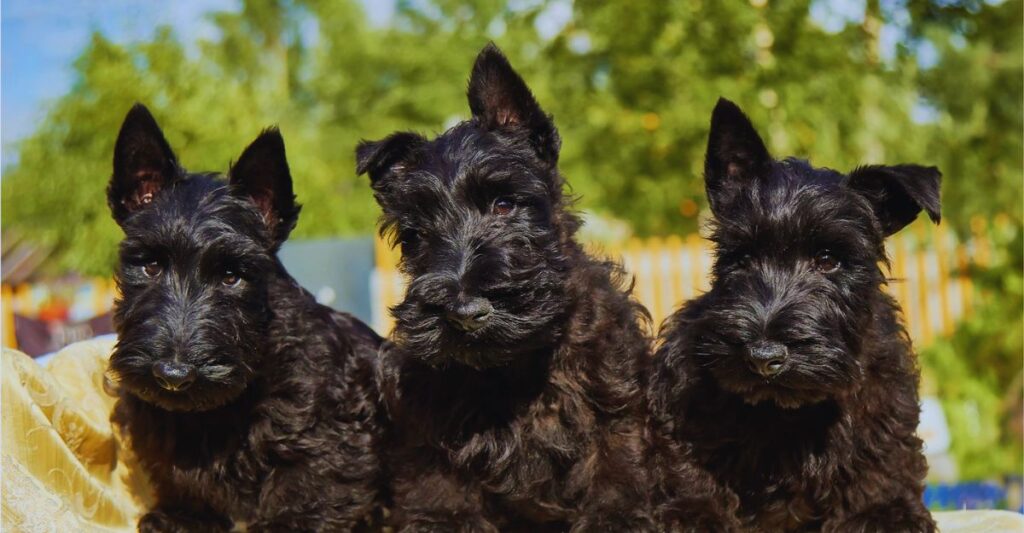
Scotties, or Scottish Terriers, came from the rugged Highlands of Scotland, where people needed a small, tough dog to hunt rats and badgers. These dogs have been around for centuries but became a proper breed in the late 1800s.
Scotties really took off in popularity during the Victorian era and became famous worldwide, even becoming the favorite breed of U.S. President Franklin D. Roosevelt.
Physical Characteristics
Size & Build
Jack Russell
- 10–15 inches tall, 13–17 lbs
- Lean, athletic, built for speed
Scottish Terrier
- About 10 inches tall, 18–22 lbs
- Short, sturdy, solidly built
Coat Type & Colors
Jack Russell
- Smooth, rough, or broken coats
- Mostly white with black, tan, or brown patches
Scottish Terrier
- Hard, wiry outer coat with a soft undercoat
- Colors include black, brindle, and wheaten (light yellowish)
Distinctive Features
| Feature | Jack Russell | Scottish Terrier |
| Ears | Folded forward (V-shape) | Small and upright |
| Tail | High-set, lively | Docked short with a brushy look |
| Head | Flat skull, strong muzzle | Broad skull, big beard |
| Expression | Bright, alert | Keen, confident |
Temperament & Personality
Energy Levels
- Jack Russell: Nonstop! They need at least 60–90 minutes of active exercise or they get bored (and naughty).
- Scottish Terrier: Moderate. A good walk and a little play each day keeps them happy.
Independence & Stubbornness
- Jack Russell: Super independent, with a strong prey drive. Can be impulsive if not kept busy.
- Scottish Terrier: Calm but a bit stubborn too. They like doing things their way.
Affection & Social Needs
- Jack Russell: Very attached to their people and love lots of playtime.
- Scottish Terrier: Loyal but a little reserved. They enjoy quiet, close companionship.
Good with Kids and Other Pets?
- Jack Russell: Best with older kids who understand how to handle dogs. Small pets might be at risk because of their strong chase instinct.
- Scottish Terrier: Fine with older kids. Can be territorial with other dogs or small pets if not properly introduced.
Exercise & Activity Requirements
Daily Exercise
- Jack Russell:
Needs about 90 minutes of running, fetching, and active play. They can jump five-foot fences, so secure yards are a must! - Scottish Terrier:
About 60 minutes of daily walks and play. They don’t swim well, so be careful around pools and lakes.
Mental Stimulation
- Jack Russell: Loves puzzle games, scent work, flyball, and agility courses.
- Scottish Terrier: Enjoys short training sessions, food puzzles, and exploring new places on walks.
Best Fit Homes
- Jack Russell: Thrives in big spaces where they can run, dig, and explore.
- Scottish Terrier: Perfect for apartments or homes with a calm environment.
Trainability & Intelligence
Learning Styles
- Jack Russell: Crazy smart but easily bored. Keep training sessions short and fun (5–10 minutes).
- Scottish Terrier: Smart but stubborn. They like clear instructions and short, varied lessons.
Common Challenges
- Jack Russell: Getting them to come back when called if they see something to chase.
- Scottish Terrier: They can be territorial and a bit bossy if not trained early.
Best Practices
- Keep training positive with treats and toys.
- Short, fun sessions work best.
- Socialize early so they grow up confident and easygoing.
Grooming & Maintenance
Coat Care
- Jack Russell: Brush once a week. Rough coats might need hand-stripping every couple of months.
- Scottish Terrier: Needs monthly professional grooming (hand-stripping or clipping) and weekly brushing to avoid mats.
Routine Care
- Nail trims every 4–6 weeks
- Ear cleaning once a week
- Brush their teeth several times a week if you can
Seasonal Needs
- Jack Russell: They shed more in spring but dry quickly if they get dirty.
- Scottish Terrier: Thick coats protect them in winter but need regular grooming all year round.
Health & Lifespan
Jack Russell
- Lives around 13–18 years.
- Watch for issues like knee problems, eye disorders, deafness, and sometimes nerve issues.
Scottish Terrier
- Lives about 12–14 years.
- Can have issues like bleeding disorders, knee problems, eye conditions, and a unique nerve condition called “Scottie cramp.”
Good vet care, health screenings, and proper diets can go a long way toward keeping them healthy.
Living Environment & Suitability
Best Home Setup
- Jack Russell: Needs a big yard with secure fencing. Loves outdoor space.
- Scottish Terrier: Likes cozy indoor spaces with people around most of the time.
Apartment Life?
- Jack Russell: Possible if you’re super committed to daily exercise, but a house is better.
- Scottish Terrier: Very apartment-friendly if they get their daily walk.
Travel
- Jack Russell: Loves car rides but needs active stops on long trips.
- Scottish Terrier: Travels well if given time to rest and stretch out.
Puppy Care & Early Socialization
Important Early Socialization (3–14 Weeks)
- Expose them gently to household noises, people, and other pets.
- Use treats and praise to build confidence.
Early Training Focus
- Crate training and potty training are key.
- Teach basic commands like “sit,” “stay,” “come,” and “leave it.”
Special Tips for Each
Jack Russell: Start leash training early and create places where they can safely dig.
Scottish Terrier: Help them meet new people and dogs early to prevent bossy behavior later.
Ownership Costs & Adoption Info
Upfront Costs
- Jack Russell: $800–$1,500 (more for top show lines)
- Scottish Terrier: $800–$2,000 depending on breeder
- Adoption Fees: $100–$400 if you adopt through a rescue.
Yearly Expenses
| Expense | Jack Russell | Scottish Terrier |
| Food | $300–$500 | $400–$600 |
| Grooming | $100–$200 (DIY) | $500–$800 (professional) |
| Vet Care | $400–$600 | $500–$700 |
| Training | $200–$400 | $150–$300 |
| Other Costs | $200 | $200 |
Where to Look
- Jack Russell Terrier rescues
- Scottish Terrier Club rescues
- Breed clubs and responsible breeders
Quick Pros & Cons
| Trait | Jack Russell | Scottish Terrier |
| Energy | Very High | Moderate |
| Grooming | Low | High |
| Training | Smart but stubborn | Smart but independent |
| Family Fit | Best for active homes | Great for calm homes |
| Health | Generally healthy but watch knees and eyes | Good overall but watch for specific genetic issues |
Conclusion & Final Tips
Choosing between a Jack Russell and a Scottish Terrier really comes down to your lifestyle:
- Pick a Jack Russell if you want an energetic buddy who will go running, hiking, and adventuring with you every day.
- Pick a Scottish Terrier if you prefer a loyal, low-shedding friend who enjoys daily walks and lots of quiet snuggle time.
Pro Tip: Meet a few of each breed before deciding! Go to rescue events, breed meetups, or breeders. Getting a real feel for their personalities will help you find your perfect match.

Pet trainer with a passion for helping animals and owners build strong, loving bonds through positive reinforcement and expert care.